 Skip to content
Commercial carpet takes more abuse than most people realize.
In busy workplaces, hundreds of footsteps move across the same areas every day. Entryways collect dirt from outside, hallways funnel traffic through narrow paths, and reception areas experience constant movement from visitors and staff. Even when a building looks generally clean, those concentrated traffic patterns quietly grind soil into carpet fibers.
Over time, the results become visible. Carpet begins to look darker along walking paths. Fibers flatten. Stains appear more easily. Facility managers often assume the flooring is simply wearing out.
In reality, most commercial carpet deterioration starts with soil accumulation and traffic concentration, not age. When maintenance practices address those two issues correctly, carpet systems can last significantly longer while maintaining a professional appearance.
Understanding how to care for high-traffic carpet is one of the most practical ways businesses can protect both their facility’s appearance and their flooring investment.

Why High-Traffic Areas Wear Down Faster
Commercial carpet is engineered for durability, but it still follows the same basic principle as any flooring material: abrasion causes wear.
In high-traffic zones, small particles of sand, grit, and dust settle into the carpet pile. Each step presses those particles deeper into the fibers. Over time, they act like microscopic abrasives, slowly cutting and flattening the carpet strands.
This is why wear patterns appear in predictable areas:
- building entrances
• hallways and corridors
• reception desks
• elevator exits
• breakroom entrances
These zones experience repeated pressure in the same direction, which causes fibers to bend and compress. Without proper cleaning, soil becomes trapped in the pile and accelerates deterioration.
The goal of commercial carpet maintenance is not simply to keep the surface looking clean. It is to remove the abrasive soil that causes long-term damage.
Maintaining carpet in busy commercial environments also depends on using the right equipment. Our guide to recommended cleaning tools every home should have explains the types of tools cleaning professionals rely on to control soil and maintain high-traffic surfaces effectively.
Spot Cleaning Prevents Permanent Stains
Even with good maintenance, spills happen in commercial environments.
Coffee in an office hallway. Juice in a daycare classroom. Food residue in a breakroom. When these spills sit too long, they soak into the carpet backing and create stains that are difficult to remove.
Prompt spot cleaning helps prevent permanent discoloration.
The key is to treat spills as soon as possible and avoid aggressive scrubbing. Blotting the area gently with the appropriate cleaning solution helps lift the contaminant without spreading it deeper into the fibers.

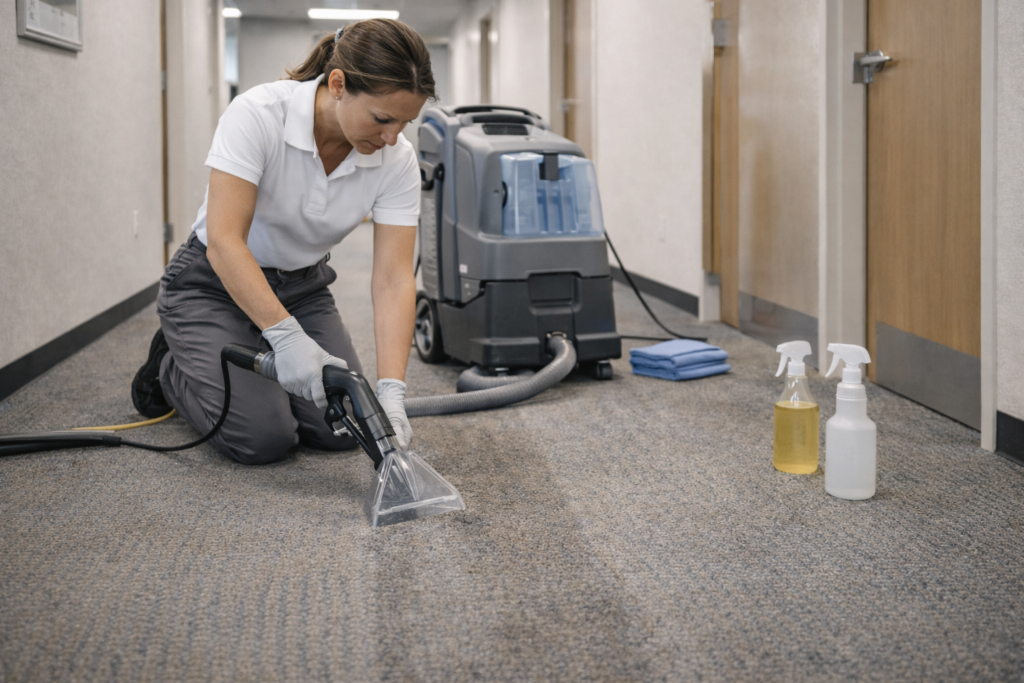
Using the correct cleaning tools also helps prevent stains from spreading deeper into carpet fibers. Many professional technicians rely on specialized spot-cleaning tools designed to lift contaminants without damaging the carpet pile.
Different types of spills require different cleaning agents, which is why many facilities rely on trained cleaning staff to address stains correctly.
When handled quickly and properly, most carpet spills can be removed without long-term damage.
Why Deep Soil Requires Professional Cleaning
Even with diligent vacuuming, commercial carpet eventually accumulates soil below the surface.
Foot traffic presses particles into the backing and lower layers of the carpet pile. At that point, standard vacuuming cannot fully remove the contamination.
Professional carpet cleaning methods address this deeper buildup.
Two commonly used approaches include hot water extraction and encapsulation cleaning. Both methods target embedded soil, but they operate differently depending on the carpet system and facility needs.
Extraction cleaning flushes contaminants from deep within the fibers, while encapsulation methods surround soil particles with a cleaning polymer that allows them to be vacuumed away later.
The right approach depends on factors such as carpet type, building usage, and traffic levels.
When soil buildup becomes severe, deeper restoration cleaning may be required to fully reset flooring systems. Our overview of deep cleaning services in Jacksonville explains how deeper cleaning methods remove buildup that routine maintenance cannot fully address. Many businesses incorporate periodic professional carpet cleaning into their broader facility maintenance plan to prevent long-term deterioration.
In many cases, this service is coordinated as part of a building’s ongoing commercial cleaning program rather than handled as a separate emergency response when carpets begin to look worn.
Maintaining Commercial Carpet Requires More Than Surface Cleaning
Routine vacuuming helps control surface debris, but deeper soil buildup eventually settles into the carpet fibers. Over time, this hidden contamination contributes to wear, discoloration, and persistent odors.
Many businesses address this by incorporating periodic carpet care into their regular facility maintenance routine. Professional commercial cleaning programs can help remove embedded soil, maintain appearance, and protect the long-term lifespan of commercial flooring.
Learn more about our commercial cleaning services and how structured facility maintenance helps protect your building’s interior environment.
How Often High-Traffic Commercial Carpet Should Be Cleaned
Cleaning frequency varies based on the type of facility and the amount of daily traffic.
Offices with moderate foot traffic may require professional carpet cleaning once or twice per year. Facilities with heavy activity — such as medical offices, schools, or retail environments — may benefit from more frequent service.
Areas that see constant movement often need attention more often than the rest of the building.
Regular professional cleaning helps accomplish two things at once. It restores the carpet’s appearance and removes embedded soil that slowly damages the fibers.
Waiting until carpet visibly looks dirty usually means contamination has already been accumulating for months.
A proactive maintenance schedule prevents that cycle from developing.
Signs Your Carpet Needs Professional Attention
Commercial carpet does not usually fail suddenly. Instead, warning signs appear gradually.
Common indicators include:
- visible traffic lanes that appear darker than surrounding carpet
• flattened fibers that no longer stand upright
• recurring stains that reappear after cleaning
• persistent odors trapped in the carpet pile
When these signs appear, it often means soil has accumulated beneath the surface.

Professional cleaning at this stage can frequently restore much of the carpet’s appearance and prevent further deterioration.
Ignoring these indicators for too long may allow permanent damage to develop.
Protecting the Lifespan of Commercial Flooring
Carpet is a significant investment in many commercial facilities. Replacing flooring across an office suite, school, or retail space can become a major operational expense.
Proper maintenance extends the usable life of that flooring while keeping the building looking professional.
Consistent vacuuming, prompt spot cleaning, protective entryway matting, and periodic deep cleaning all contribute to healthier carpet systems.
Businesses that treat carpet care as part of their overall facility maintenance strategy typically see better long-term results than those that only address cleaning when visible problems appear.
Organizations that maintain structured cleaning routines — often coordinated through experienced commercial cleaning services — can protect both the appearance and longevity of their flooring systems.
Final Thoughts
High-traffic commercial carpet will always experience wear. That is simply the reality of busy workplaces.
What determines whether that wear becomes premature deterioration is the maintenance strategy behind it.
Removing abrasive soil, protecting entryways, addressing spills quickly, and scheduling periodic professional cleaning all help carpets maintain their appearance for years longer than neglected flooring.
For facility managers responsible for maintaining professional environments, consistent carpet care is not simply about appearance.
It is about protecting the building’s long-term investment in its flooring.