 Skip to content
For many families, the house rarely stays clean for long. These cleaning hacks for busy parents can help keep things manageable even when work, school schedules, and everyday life compete for your time.
Between work schedules, school routines, sports practices, and everyday life, messes accumulate faster than most parents can realistically keep up with. Toys migrate across the living room floor. Laundry builds up in quiet corners. Kitchen counters slowly collect the evidence of a full day.
Most cleaning advice assumes people have the luxury of long blocks of uninterrupted time. Parents know that rarely exists.
Keeping a home manageable when life is busy isn’t about cleaning more. It’s about reducing buildup and focusing on the tasks that make the biggest difference.
Small systems — repeated consistently — can prevent the house from feeling overwhelming.
Focus on Containment, Not Perfection
One of the most effective shifts busy parents can make is changing how they think about cleaning.
The goal is not a perfectly spotless home every day. The goal is keeping things contained so mess doesn’t spiral out of control.
That means prioritizing:
- kitchen surfaces
- bathroom sanitation
- visible clutter
- high-traffic areas like entryways and living rooms
When these spaces stay reasonably maintained, the home feels under control even if less visible areas aren’t perfect.
Parents who try to tackle everything at once usually burn out quickly. Parents who focus on the most impactful areas tend to maintain a stable routine.
A 10-Minute Cleaning Hack for Busy Parents
One simple habit can dramatically change how a home feels at the end of the day.
A 10-minute evening reset.
Set a timer and quickly move through the main living spaces with a clear goal: restore order before bedtime.
Typical tasks might include:
- returning toys to bins
- loading the dishwasher
- wiping kitchen counters
- straightening couch cushions
- gathering loose laundry
Ten minutes is short enough that the task feels manageable, but long enough to prevent clutter from carrying into the next day.
Over time, this habit stops mess from building into larger weekend cleaning projects.
Create “Drop Zones” for Daily Chaos
Many household messes come from objects that don’t have a clear home.
Backpacks, shoes, jackets, mail, and school supplies often land wherever the nearest flat surface happens to be.
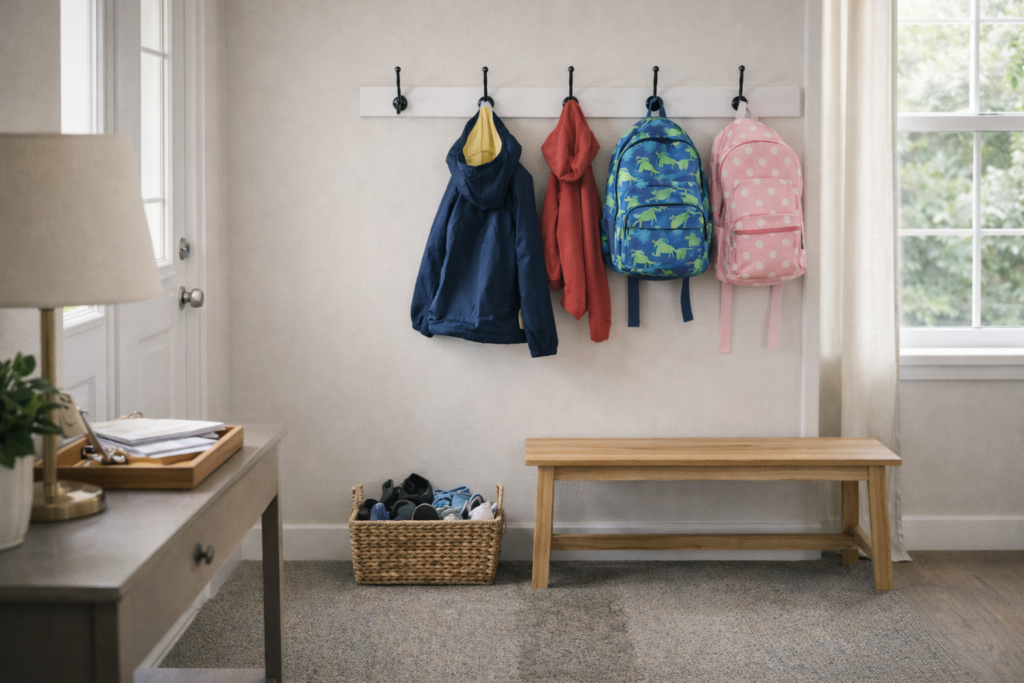
Designating simple drop zones near entryways can dramatically reduce this problem.
A functional drop zone might include:
- a basket for shoes
- hooks for backpacks or jackets
- a small tray for keys and mail

When every frequently used item has a consistent place, clutter stops spreading throughout the house.
It’s a small adjustment that often saves parents a surprising amount of time.
When Routine Cleaning Becomes Too Much
Keep Cleaning Supplies Where You Use Them
Another common time barrier is simply retrieving cleaning tools.
If supplies are stored in a single location — often a hallway closet — small cleaning tasks can feel inconvenient enough to delay.
Keeping the right tools within reach can make quick cleanups far easier to manage. Our guide to recommended cleaning tools every home should have explains the basic equipment professional cleaners rely on for everyday household cleaning.
Instead, consider keeping small cleaning kits in high-use areas, such as:
disinfecting wipes in the bathroom
a microfiber cloth and spray under the kitchen sink
a handheld vacuum in the living room
When supplies are within reach, quick cleanups become effortless rather than postponed.
This approach encourages short maintenance tasks instead of waiting for full cleaning sessions.

Rotate Small Tasks Throughout the Week
Many households fall into the pattern of saving all cleaning for weekends.
For busy families, that often leads to long, exhausting cleaning days.
A better approach is task rotation.
Instead of doing everything at once, assign small tasks to different days.
For example:
Monday — wipe down bathroom surfaces
Tuesday — vacuum main living areas
Wednesday — laundry reset
Thursday — kitchen appliance wipe-down
Friday — quick dusting of high-traffic spaces
Each task takes only a few minutes, but together they prevent the house from reaching a breaking point.
Parents who adopt this method often find weekends feel significantly lighter.
Involve Children in Age-Appropriate Cleaning
Children are part of the household system, which means they can also be part of maintaining it.
The key is keeping tasks simple and consistent.
Young children can help with:
- picking up toys
- putting laundry in baskets
- wiping lower surfaces
Older children can assist with:
- loading the dishwasher
- vacuuming shared spaces
- folding laundry
When these routines become normal household expectations, cleaning becomes a shared responsibility rather than a constant burden on one parent.
Even small contributions add up over time.

Reduce Visual Clutter Whenever Possible
A large portion of household mess is not dirt — it is simply too many objects competing for space.
Reducing unnecessary items makes every cleaning task easier.
Some practical strategies include:
- rotating toys instead of keeping all of them accessible
- storing seasonal items out of the main living space
- limiting duplicate kitchen tools and gadgets
Fewer objects mean fewer surfaces to manage, fewer items to organize, and fewer places for clutter to hide.
Many families notice that once clutter decreases, routine cleaning becomes significantly faster.
Some families also simplify their cleaning routines by reducing unnecessary chemical products and switching to safer alternatives. Our article on what green cleaning means for your home and health explains how environmentally conscious cleaning methods work in everyday homes.
When Routine Cleaning Becomes Too Much
Even with good systems in place, some seasons of life become overwhelming.
New jobs, school transitions, newborns, or demanding schedules can make it difficult to maintain household routines.
For many families, this is the point where professional support becomes a practical option.
Some parents choose to bring in help occasionally for larger resets, while others schedule recurring maintenance visits to keep the home consistently manageable.
If maintaining your home has become difficult to balance with work and family responsibilities, professional residential cleaning services can help restore stability without adding more pressure to your schedule.
A Manageable Home Doesn’t Require Endless Cleaning
Parents often feel like they are constantly chasing the next mess.
But homes that feel manageable rarely come from hours of daily cleaning.
They come from small systems that prevent problems from building up.
Short resets, clear storage spaces, simple routines, and shared household responsibilities can dramatically reduce the stress of maintaining a busy home.
And when life becomes too full to handle everything alone, bringing in occasional help can be a practical way to protect both your time and your peace of mind.
Keeping a home functional doesn’t require perfection.
It simply requires a system that works for the reality of everyday family life.